
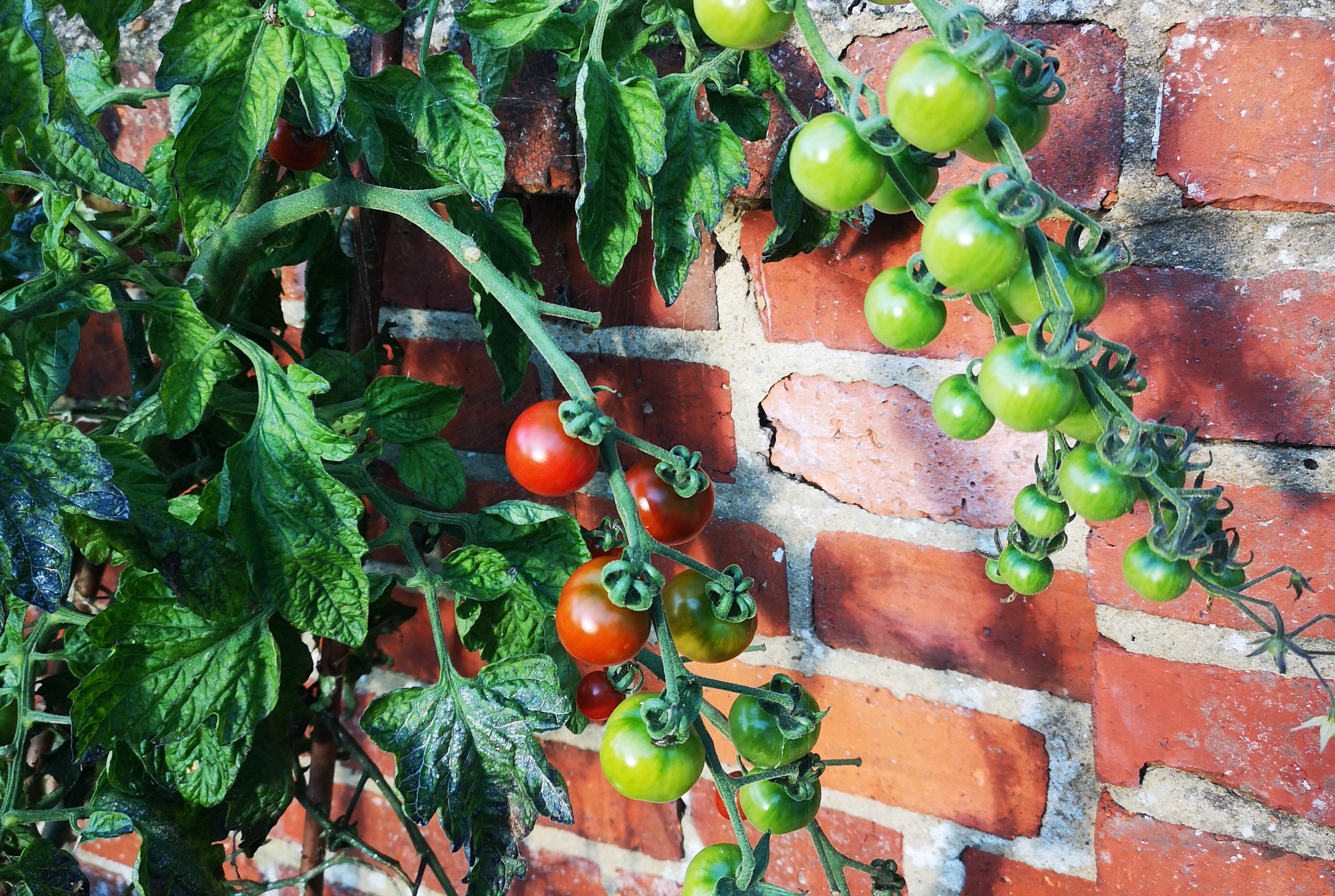
If you have a small garden, plot or patio, you can still grow fruit and vegetables organically. You might just need to be a little bit creative.
BHOGG’s Ruth Urbanowicz spoke on this topic at the Brighton & Hove Green Spaces Forum autumn seminar in 2024 and we’ve summarised her helpful tips for you here.
Even a sunny balcony or windowsill can grow herbs, cherry tomatoes or cut and come again salads. While potatoes, tomatoes and peppers grow very well in containers if you only have a paved area.
Follow our tips for gardening success.
Think vertically
Make the best use of limited space by growing vertically using trellis, stakes and hanging baskets. Climbing beans give the biggest crop for their footprint. Read more about vertical growing in our previous blog post.
Apples can be grown on dwarf rootstock and trained as low espaliers (step overs) at the edges of beds or as espaliers or cordons supported on walls or fences.
Maximise your harvest
If you have a small bed for your vegetables, maximise your harvest by
- successional sowing at 3-4 week intervals.
- intercropping e.g. salad crops between rows of slow crops
- having follow on crops (eg leeks after early potatoes).
If you have lots of plants in a small area (like in a square foot garden), make sure the tallest is at the north of the bed so that the sun reaches the smaller plants.
Include perennials
Most vegetables are annual, while most fruit and herbs are perennial. However, there are some perennial vegetables, such as Jerusalem artichoke, rhubarb and globe artichoke (which does double duty as a striking architectural plant for the back of the border).
Perennials are often considered easier as you don’t need to sow, prick out and harden off seedlings each spring. As they’re already established in the garden they will often crop early to fill the ‘hungry gap’ while annual plants are still getting going.
Grow in containers
Many crops will do well in containers and can even be better protected from slugs, birds and the weather. You can even grow small cherry tomatoes and strawberries in hanging baskets.
Read on to find out how to grow tomatoes and potatoes, both plants are very easy to grow in containers.
Tomatoes
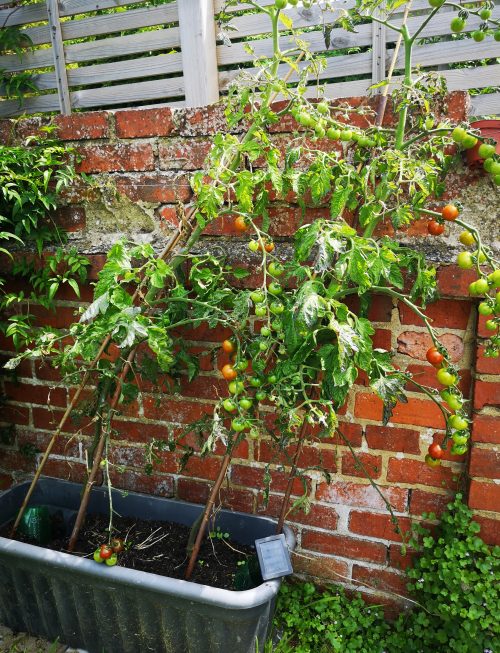
Tomatoes take 20 weeks (five months) from sowing until harvest, so make sure to start your seeds or seedlings early in warmth and light. A sunny windowsill will work, but remember to harden them off before planting outside. You can grow tomatoes in growbags against a sunny wall. Use a double growbag, with holes cut in the base of the top one. Pinch out side shoots and support with canes. Watch out for blight in late August. Water and feed regularly whilst flowering and fruiting.
Potatoes
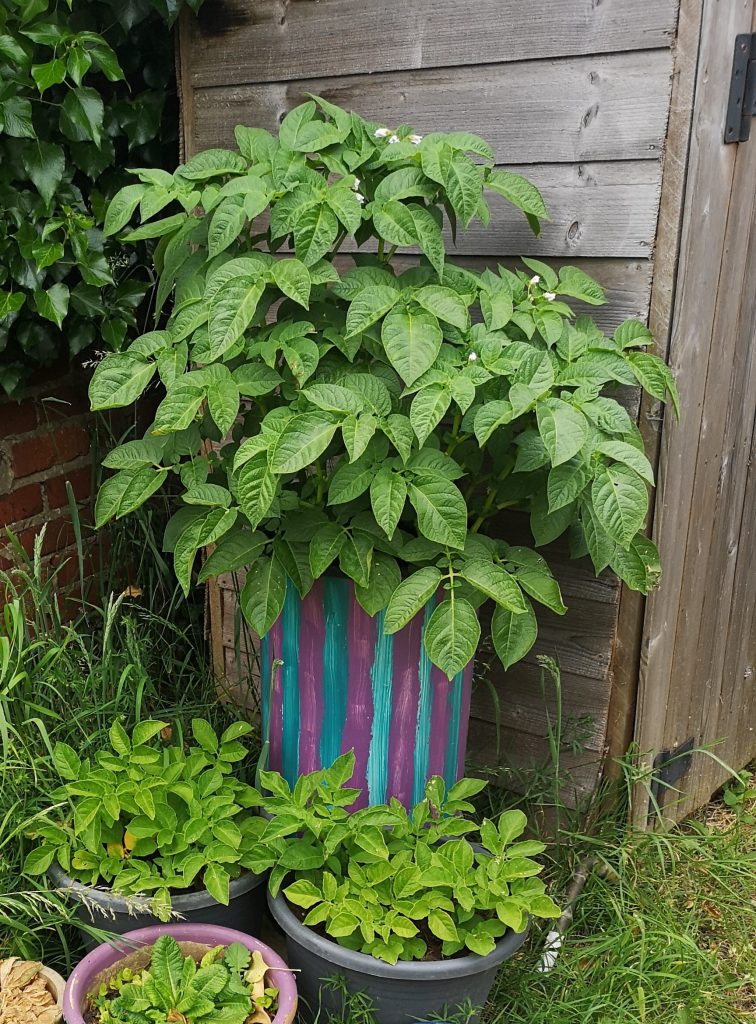
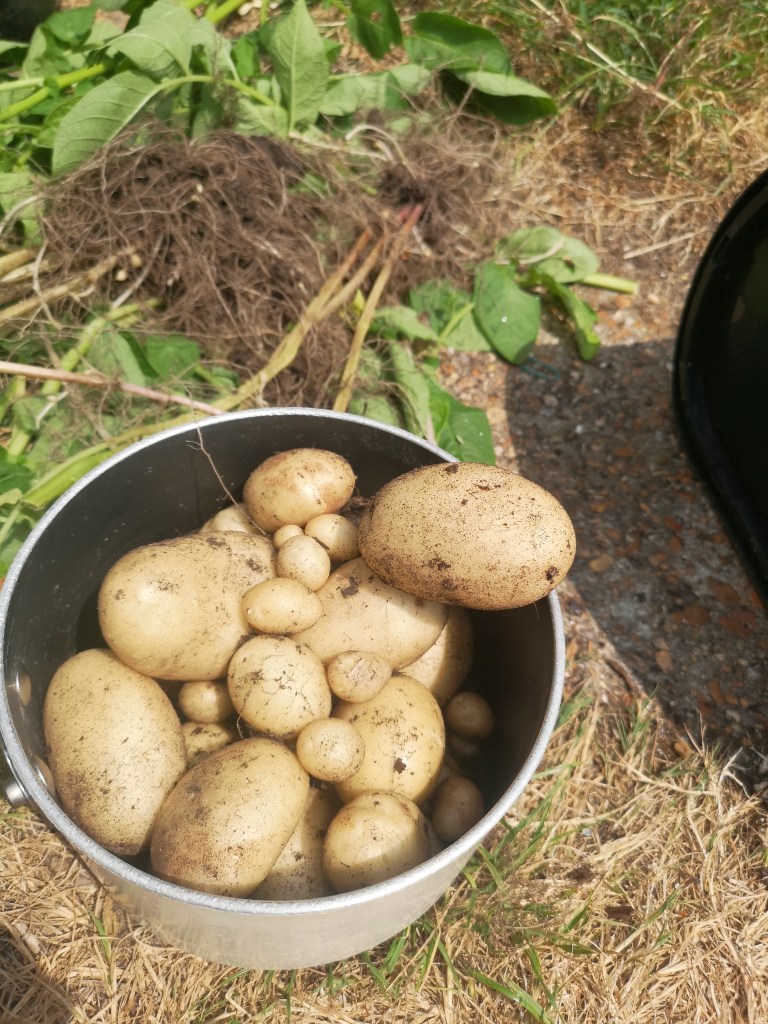
Potatoes can be grown in containers (tall pots or bags) in a sunny spot. First early potatoes are very good for this. Use peat-free multi-purpose compost, but always add some soil for fungal mycelia. Fill compost to a third depth, add spuds, then fill another third. Add more compost to ‘earth up’ when shoots show. Water as needed. Watch our video for tips on planting potatoes.
Compost
If you don’t have space for a conventional compost bin, you could try a wormery on a patio or even a bokashi bin in your kitchen to make nutritious plant feed from vegetable peelings and garden cuttings.
Protect from pests
There are many ways to protect your plants from pests without resorting to harmful pesticides.
Some of these methods, like physical barriers, can even be easier if you’re growing in containers.
Elevate pots or use grit to prevent slugs and snail and hide slug pubs amongst your pots. Netting, fleece and cloches will protect crops from birds. While netting, nettle spray and companion planting can help with caterpillars.
Aphids can be sprayed with a strong jet of water or sprayed with soft soap, or better still, attract aphid predators with companion planting.
Happy growing!
 Brighton and Hove Organic Gardening Group