
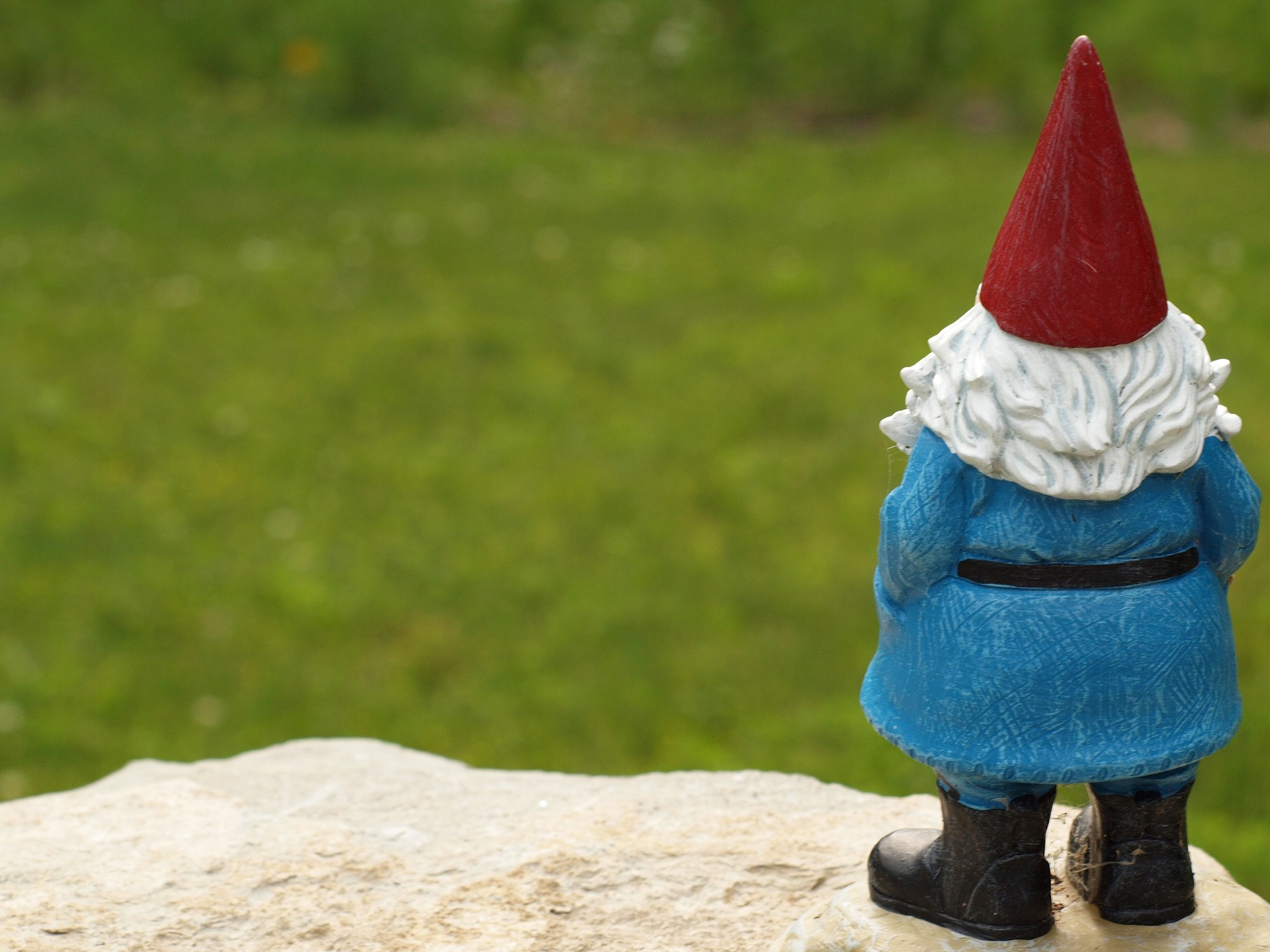
Our faithful Gnome gives us his wise words for winter
Wet windy winter is a good time to review the year’s successes and failures. So it’s time to get the plot plans out and work out what is going where next year; a brief reminder of basic rotation: ROOTS> LEGUMES> BRASSICAS & LEAVES> OTHERS [courgettes, squash, sweet-corn]. Also leeks can follow early spuds; green manures can be sown in March on beds for ‘others’ which are planted out in May.
Here are some more things to do in winter:
PRUNING: hedges and shrubs except conifers and those that will flower in spring; do this by the end of January as birds start building nests in February.
Apple and pear trees; blackcurrants: (cut back about a third of the bush, removing the oldest stems to the ground and cutting out dead, diseased and crossing branches); autumn fruiting raspberries can be cut to the ground and grape vines cut to two buds beyond the main stems. We can also apply organic fertilisers (high potash) and mulches around all fruit trees and bushes [late winter].
PLANTING: Trees, hedges, shrubs and bushes can be planted or moved in winter; late winter is best on heavy soil and early winter on well drained land. Dig out perennial weed roots ; make a generous hole, adding some organic matter, with the plant at the same depth as it was previously, water in and firm soil, staking if necessary, mulch.
PROTECTING: put tender plants into greenhouse or cold-frame, first checking for pests and diseases. They may need to be watered sparingly from time to time.
CLEARING AND CLEANING, REPAIRING AND RENEWING: All beds need to be cleared, other than those containing hardy winter veg like leeks. Gather all fallen leaves into a wire mesh container or into black bin liners, moistening the contents and pricking the bags with the garden fork; pop them into an unobtrusive corner as they take at least a year to rot down; once rotted they make a fabulous soil conditioner. Clear gutters, tidy and clean sheds, greenhouses (and insulate if needed), cold-frames, and paths. Sharpen and oil tools; wash seed-trays and pots in hot soapy water. Get rid of all rubbish. Clean out bird boxes, feed the birds and keep some unfrozen water available.
Thinking ahead to feeding the BEES: its best to raise bee friendly plants from organic seeds, as there is no guarantee that plants bought from garden centres are free from neonicotinoids [the ban doesn’t apply to plants raised under glass]. Try to make sure there is something in flower right through the year. Some suggestions: Viburnum tinus and V. bodnantense are winter flowering shrubs. Hardy Fuchsias are often in flower June to November; borage replenishes it’s nectar within minutes; Verbena bonariensis stays in flower all summer and autumn and casts no shade; Pulmonaria tolerates shade and flowers in late winter right through spring, as does dwarf comfrey. Here’s an RHS list of good bee plants:
- Lavender – Lavandula spp. Rosemary – Rosemarinus officinalis
- Sage – Salvia spp.Coneflower – Echinacea spp.
- Sunflower – Helianthus spp. Catnip – Nepeta spp.
- Penstemon – Penstemon spp. Lamb’s Ear – Stachys spp.
- Verbena – Verbena spp. Phacelia – Phacelia spp.
- Aster – Aster spp. Black-eyed Susan – Rudbeckia spp.
- Oregano – Origanum spp. Yarrow – Achilliea millefolium
 Brighton and Hove Organic Gardening Group