

‘The only way is up’: vertical growing on the plot by Kate Harrison
It’s fun to try new things on the plot – and to share the successes and failures with others. Here I’ll be telling you about my experiments with vertical growing. The idea was to make the most of my plot, and to work with the climbing and scrambling preference of beans and squash.
The experiments
I was inspired by this video from Permaculture Magazine, showing a beautifully built structure made from recycled materials. I used thick hazel sticks, sold in the Weald allotment shop, with wire and string. I had some smaller lengths of hazel for the other end, from winter pruning of the hazel hedges on my plot.
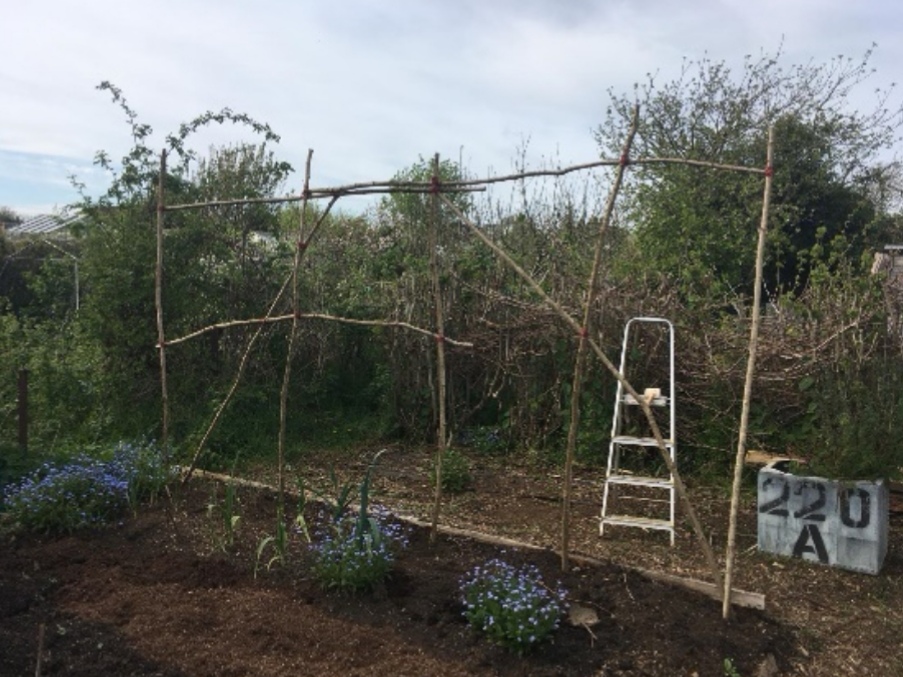
Building the L-shaped bean frame – I strung wires and string diagonally up to the top
I strengthened the structure with horizontal poles and thin hazel sticks, and tied ‘guy ropes’ of twine to the hedge behind. I also grew a ‘catch crop’ of peas up the vertical side, before the beans grew. It didn’t blow over, even fully laden with rows of growing beans.
I also tried growing squash over a couple of different structures. I know squash likes to scramble, I’ve even seen it growing up the hazel hedges, and keeping the squash off the ground and in the sunlight is a good thing to aim for. I was lucky enough to find a rose arch in the ‘middle of Lidl’, and also tried re-purposing some plumbers’ piping I’d used previously to build hoops for netting over my brassicas. It works really well pushed over bamboo sticks stuck into the ground.

A bargain rose arch from the ‘middle of Lidl’. Brassica netting in the background, over plumbers’ pipes.
The results
Overall, I was really happy. I liked the look of the structures on the plot, adding interest and structure. The squashes growing over the rose arch were the most successful. The arch remained stable, and I was able to grow two squash plants over it, one from either side. I was amazed to see the squashes grow strong tendrils to cradle and attach themselves to the structure. The hoops made of plumbers’ piping also worked well, but the growth was a bit too dense, and some of the squashes ended up on the ground.
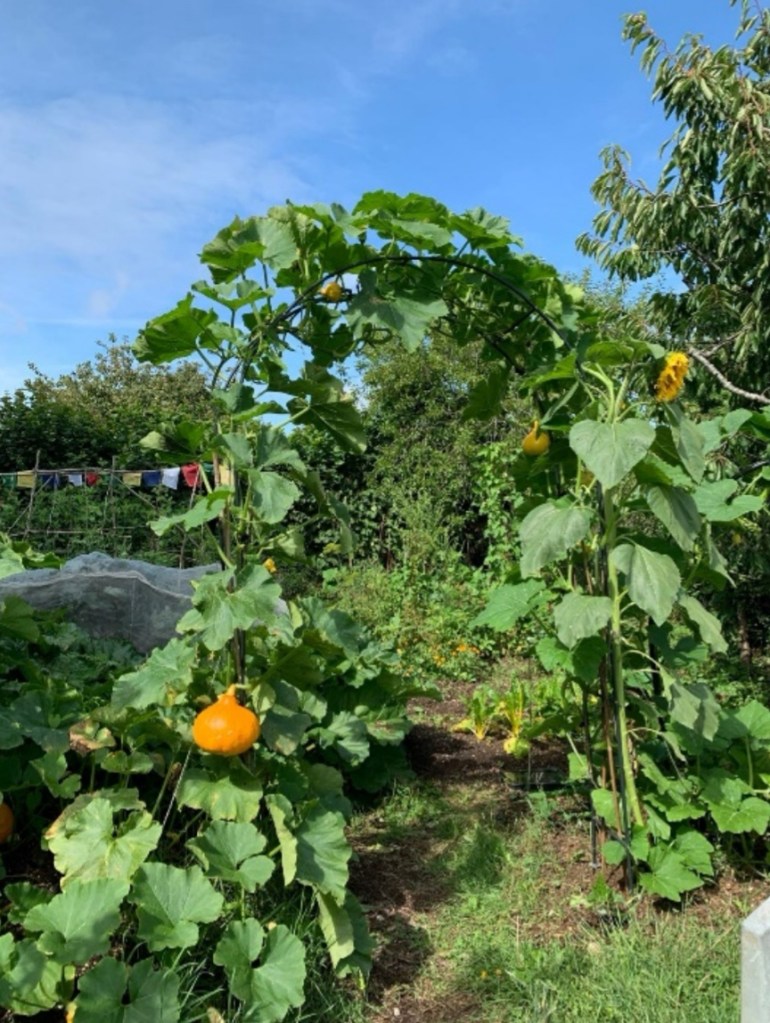
This arch supported the squash vines and survived some strong late summer winds.

Another structure, built using plumbers’ pipe from Screwfix.
The positive aspects of the l-shaped bean frame were that there was plenty of length for the bean vines to grow up, the beans higher up the structure hung down and were easy to pick, and the runner beans grew beautifully long and straight. I got good crops from all three varieties (runner beans, borlotti and succotash). As you can see from the photos, I also had a great ‘catch crop’ under the beans. I grew salad, and then fennel and some chard, with opportunistic self-seeded marigolds.
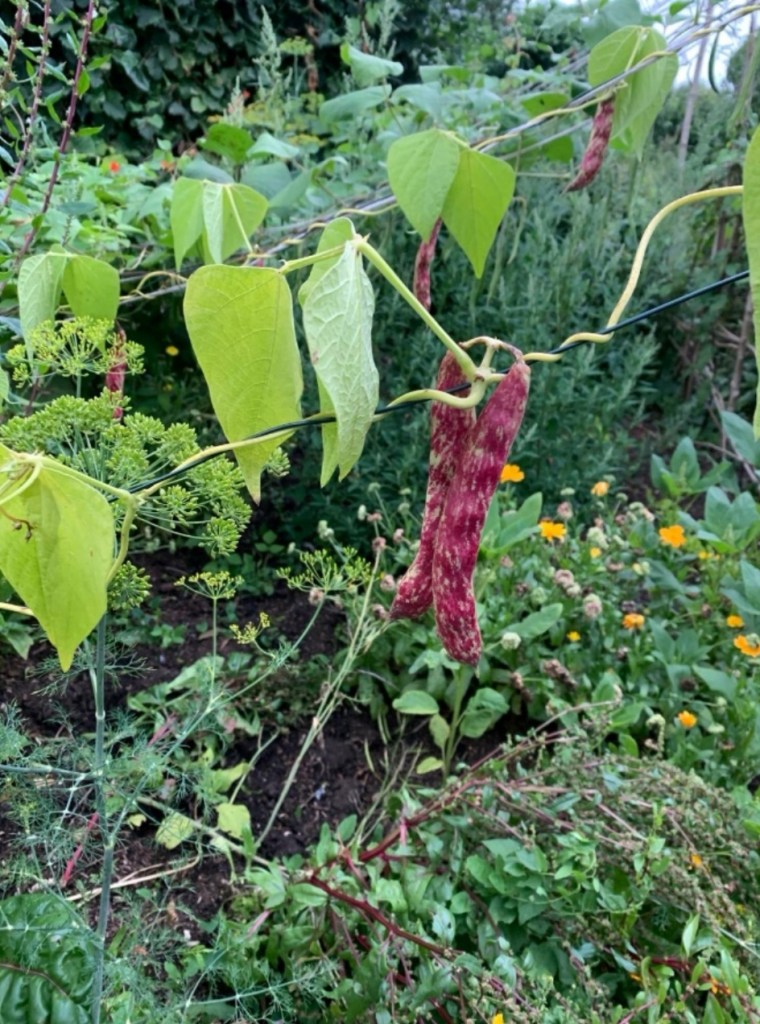
Borlotti beans
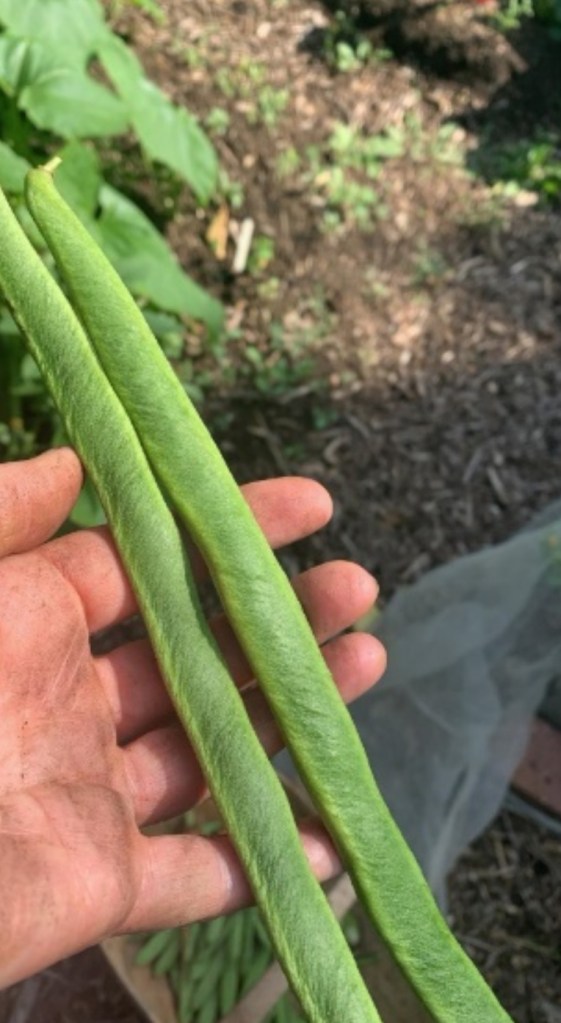
If you want prize-winning long, straight runner beans, this works!
On the negative side, I had a problem with the beans lower down ending up on the ground and being munched by woodlice and slugs. The growth lower down also became very dense and tangled. I also felt the combination of wire and jute strong was not stable enough for the beans to grow up – it sagged. Looking at the Permaculture Magazine structure, they had a short vertical run for the beans to get started on, so beans were lifted off the ground, and they used sticks instead of string for the beans to grow up.
I still think this is a better frame than the traditional wigwam or row of bamboo canes tied at the top. I’m going to keep experimenting – it’s always interesting!
 Brighton and Hove Organic Gardening Group